

Biologics CMC 系列(四):Biologics Control Strategy—如何把製程、分析與法規要求整合成一套控制策略?


Executive Summary
Biologics Control Strategy 不是一張檢測項目清單,而是一套從原物料、製程、分析、規格到持續監測的整合設計。
Control strategy 應建立在 product and process understanding,以及 quality risk management 之上。
Release specifications 只是最後一道品質確認,不能取代 upstream、downstream、viral safety、aseptic processing 與供應鏈控制。
Critical Quality Attributes(CQAs)、Critical Process Parameters(CPPs)與 Critical Material Attributes(CMAs)之間必須建立可解釋的關聯。
一套成熟的 control strategy 不是 IND 或 BLA 送件前才整理的文件,而是會隨開發、scale-up、technology transfer 與商業化持續更新的生命週期系統。
前言:真正的品質,不是靠最後一次檢測救回來的
在 biologics development 中,我們很容易把「產品品質」理解成 release testing。
只要 purity、potency、aggregate、charge variants、host cell protein(HCP)與 endotoxin 都符合規格,這批產品似乎就沒有問題。
但如果把視角往前拉,就會發現產品放行時看到的結果,其實是整條製造鏈累積出來的終點。
Cell bank 的來源是否穩定?Raw materials 是否存在 lot-to-lot variability?Bioreactor 中的 pH、dissolved oxygen、temperature shift 與 harvest timing 是否受到控制?Purification resin 使用次數增加後,impurity clearance 是否仍然可靠?Hold time、mixing、filtration、shipping 與 cold chain 是否可能改變產品?
這些問題,不可能只靠最後一張 Certificate of Analysis 回答。
這也是 Biologics Control Strategy 的核心:不是等產品做完後再判斷它好不好,而是在開發與製造流程中,建立多層次、彼此連結的控制,讓製程有能力持續產出符合預期品質的產品。
什麼是 Biologics Control Strategy?
ICH Q10 將 control strategy 描述為一組有計畫的控制措施。它來自對產品與製程的理解,目的是確保製程表現與產品品質。
這些控制可能包括:
Drug substance、excipients 與其他原物料的屬性控制
Facility 與 equipment 的操作條件
In-process controls
Finished-product specifications
相關分析方法
監測與控制的頻率
換句話說,control strategy 不是單一部門的文件。
它同時跨越 process development、analytical development、manufacturing、quality、regulatory affairs、supply chain,甚至 clinical 與 device/container closure 團隊。
對 biologics 而言,它還必須處理大型分子的異質性、細胞培養變異、生物活性、製程相關雜質、病毒安全性,以及蛋白質對溫度、剪切力、界面與時間的敏感性。
Control Strategy 不等於 Specifications,也不等於 Process Validation
這三個概念高度相關,但不能混在一起。
Specifications 回答的是:這一批產品是否符合預先設定的品質標準?
Specifications 通常包含 test、analytical procedure 與 acceptance criteria。它們是 control strategy 的重要部分,但不是全部。
即使一批產品通過 release specifications,也不代表製程中的所有風險都已被充分控制。某些變化可能仍在規格內,卻已形成 systematic drift;有些長期風險則可能要透過 stability、continued process verification 或 trend analysis 才看得出來。
Process Validation 回答的是:製程是否有能力持續且穩定地產出合格產品?
Validation 會提供 control strategy 有效性的關鍵證據,但 control strategy 的範圍更廣。它還包括 raw-material controls、analytical controls、sampling strategy、facility and equipment controls、storage、shipping,以及上市後的持續監測。
Control Strategy 回答的是:我們如何系統性管理所有可能影響品質的來源?
它把「產品應該長什麼樣子」、「哪些製程與物料因素可能改變它」,以及「我們要在哪裡、用什麼方式監測與控制」串在一起。

從 QTPP、CQA、CMA 到 CPP:控制策略的科學骨架
一套可被審查、也能真正執行的 control strategy,通常不是從列出所有儀器開始,而是從產品要服務的臨床需求往回推。
Step 1:先定義 Quality Target Product Profile
Quality Target Product Profile(QTPP)描述的是產品為了達到預期安全性與療效,應具備的品質特徵。
對 monoclonal antibody 而言,QTPP 可能涵蓋 dosage form、route of administration、strength、stability、sterility、container closure,以及與 mechanism of action 相關的功能要求。
Step 2:辨識 Critical Quality Attributes
CQA 是需要維持在適當範圍內,才能確保產品品質的物理、化學、生物或微生物屬性。
常見 biologics CQAs 包括:
Identity
Purity and impurities
Aggregates and fragments
Charge variants
Glycosylation profile
Higher-order structure
Biological potency
Protein concentration
Particulates
Sterility、endotoxin 與 bioburden
不是每個可測量的屬性都自動成為 CQA。團隊需要根據 mechanism of action、nonclinical and clinical knowledge、platform experience、literature、structure–function relationship,以及不確定性進行風險判斷。
Step 3:找出可能影響 CQA 的 Material Attributes 與 Process Parameters
接下來需要建立 cause-and-effect understanding。
例如,mAb 的 glycosylation 可能受到 cell line、media components、trace elements、pH、temperature、dissolved oxygen、cell age 與 harvest timing 影響;aggregation 可能受到 purification conditions、hold time、mixing、temperature excursions、concentration 與 formulation 影響。
Critical Material Attributes(CMAs)與 Critical Process Parameters(CPPs)不應只靠一次 risk-ranking workshop 決定。它們需要透過 platform knowledge、scale-down models、Design of Experiments(DOE)、development studies、manufacturing data 與持續趨勢分析逐步確認。
Step 4:決定控制點、控制方式與允收範圍
對每項重要風險,團隊都要回答:
風險在流程中的哪一個位置產生?
最適合預防、降低或偵測它的控制點在哪裡?
應採用 material specification、parameter control、in-process test、PAT、release test,還是多層控制?
Sampling frequency 與 acceptance criteria 如何建立?
若結果超出 alert、action 或 proven acceptable range,應採取什麼行動?

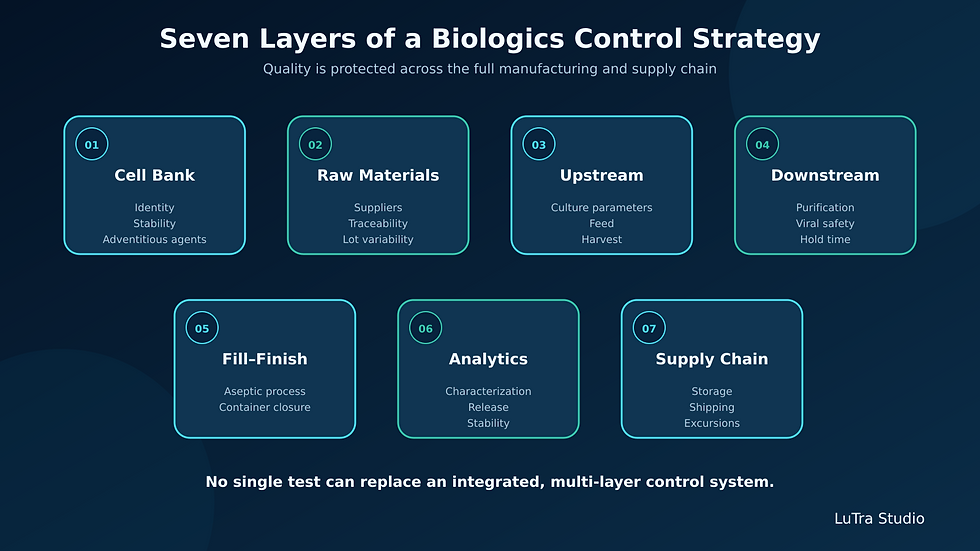
Biologics Control Strategy 應該包含哪些層次?
真正成熟的策略通常不是依賴單一關卡,而是建立多層防護。
1. Cell substrate 與 cell bank controls
包括 cell line history、identity、genetic stability、Master Cell Bank、Working Cell Bank、adventitious agent testing,以及 cell-bank storage and traceability。
Cell substrate 是整個 biologics 製程的起點。如果這一層缺乏控制,後續純化與放行檢測很難完全補救。
2. Raw-material and supplier controls
Media、feeds、resins、filters、single-use components、excipients 與一次性耗材,都可能影響製程表現或產品品質。
控制方式不只包括 incoming specifications,也包括 supplier qualification、change notification、material traceability、animal-origin assessment、lot testing,以及必要時的功能性測試。
3. Upstream process controls
Upstream controls 可能涵蓋 inoculum train、cell density、viability、pH、dissolved oxygen、agitation、gas flow、temperature、feed strategy、metabolites、culture duration 與 harvest criteria。
重點不是把所有參數都標成 CPP,而是確認哪些參數真正會影響 CQA 或 downstream process capability。
4. Downstream process controls
包括 chromatography load、flow rate、pooling criteria、column performance、resin lifetime、filter loading、viral inactivation、viral filtration、buffer conditions、hold time 與 bioburden control。
對 purification process 而言,除了 product-related impurities,也要證明 HCP、residual DNA、Protein A、media components 與病毒等 process-related impurities 能被一致地移除。
5. Formulation、fill–finish 與 container closure controls
Protein concentration、excipient composition、mixing、sterile filtration、filling accuracy、container closure integrity、particulates、light exposure、freeze–thaw 與 interface stress,都可能影響最終產品。
對無菌產品而言,aseptic process controls 與 contamination control strategy 也是整體控制系統不可分割的一部分。
6. Analytical control strategy
分析方法不是等製程完成後才接手。方法的 specificity、sensitivity、precision、range 與 stability-indicating capability,會直接決定團隊能不能看到重要差異。
Characterization methods、in-process methods、release methods 與 stability methods 的目的不同,不應全部用同一套標準看待。
7. Storage、shipping 與 supply-chain controls
產品離開工廠後,品質風險並沒有消失。Temperature excursion、shipping vibration、orientation、light、freeze–thaw 與使用前的 handling,都可能影響 biologics。
因此,shipping validation、cold-chain monitoring、excursion assessment 與 in-use stability 也應納入 control strategy。
案例:如何為 Monoclonal Antibody 建立端到端 Control Strategy?
假設團隊正在開發一個 CHO cell-derived monoclonal antibody。初步 characterization 顯示,potency 與 Fc-mediated function 可能受到 glycosylation、aggregation 與 higher-order structure 影響。
Control strategy 不應只是在 release panel 加上 glycan、SEC 與 potency testing,而是要把風險往前追。
CQA:Glycosylation profile
可能的風險來源包括 cell line、media lot、trace metals、culture pH、temperature shift、dissolved oxygen、culture duration 與 harvest timing。
可採用的控制可能包括:
Cell-bank and raw-material qualification
Media and feed controls
Defined bioreactor operating ranges
In-process monitoring of cell growth and metabolites
Harvest criteria
Glycan characterization and appropriate release/monitoring tests
Continued process verification and trend analysis
CQA:Aggregates
可能的來源包括 low-pH viral inactivation、chromatography conditions、high protein concentration、mixing、hold time、temperature 與 freeze–thaw。
控制策略可能同時包含:
Development studies defining acceptable hold-time and temperature ranges
Mixing and pump controls
Pooling criteria
Formulation optimization
SEC release specification
Stability-indicating methods
Shipping and excursion controls
Process-related impurity:Host Cell Protein
HCP 不能只靠最後一次 ELISA 判定。團隊也要了解 harvest variability、chromatography clearance、resin reuse、method coverage,以及製程 drift 是否可能改變 HCP population。
因此,控制可能分布在 upstream harvest criteria、downstream operating ranges、resin lifecycle management、in-process monitoring、release testing 與 periodic characterization。
這個案例最重要的觀念是:同一項 CQA 通常由多個控制共同保護;同一個 process parameter 也可能同時影響多個 CQAs。
Control Strategy 如何連結 IND、BLA 與 CTD Module 3?
Control strategy 並不是 CTD 中一個可以單獨填完的欄位,而是分散在 Module 3 的多個章節。
常見連結包括:
3.2.S.2:Manufacturing process and process controls
3.2.S.2.3:Control of materials
3.2.S.2.4:Controls of critical steps and intermediates
3.2.S.2.5:Process validation and/or evaluation
3.2.S.4:Control of drug substance
3.2.P.3:Manufacture of drug product
3.2.P.4:Control of excipients
3.2.P.5:Control of drug product
3.2.P.8:Stability
審查者真正看的,不只是每一節是否有資料,而是整套論證是否一致。
如果申請文件將某項屬性定義為高風險 CQA,卻沒有適當的製程控制、分析方法或 monitoring plan,邏輯就會出現斷點。反過來說,如果把大量參數都列為 critical,卻沒有資料支持其 criticality,也會讓未來的製程操作與 post-approval change management 變得僵化。
Development 階段的 Control Strategy 可以不完整,但不能沒有邏輯
早期臨床階段的資料有限,control strategy 當然不可能與 commercial-stage 完全相同。
但 phase-appropriate 不等於等到 Phase 3 才開始。
早期團隊至少要能解釋:
已知與潛在 CQAs 是什麼?
目前最大的 product and process uncertainties 在哪裡?
現有分析方法是否足以偵測重要變化?
哪些參數與物料屬性正在被監測?
哪些 knowledge gaps 會在後續開發中補上?
Scale-up、site transfer 或 formulation change 可能如何影響現有控制?
Control strategy 會隨知識增加逐步成熟。早期可能較依賴廣泛 testing 與較保守的 operating ranges;後期則應透過更深入的 process understanding、validation、historical data 與 monitoring,讓控制更有科學依據。
Lifecycle Management:控制策略不是核准後就凍結
商業化後,原物料供應商可能改變,設備會更新,分析方法會升級,製造場址可能轉移,產能也可能放大。
ICH Q10 與 ICH Q12 的重要精神,是讓 pharmaceutical quality system、knowledge management、quality risk management 與 post-approval change management 形成閉環。
一套成熟的 control strategy 應透過以下資訊持續更新:
Continued process verification
Annual product quality review/product quality review
Deviation、OOS、OOT 與 CAPA trends
Stability trends
Complaints and pharmacovigilance signals
Supplier and raw-material changes
Equipment、facility and analytical-method changes
New process and product knowledge
真正重要的不是「所有數值仍在 specification 內」,而是製程是否開始朝某個方向漂移,以及現有控制是否仍能在風險變成品質事件前偵測到它。
這也連回系列(三)的 ICH Q5E comparability:當製程或 control strategy 發生改變時,團隊必須用風險導向的 comparability exercise,證明變更前後的產品品質仍能連結既有的安全性與療效經驗。

常見錯誤:為什麼有些 Control Strategy 看起來完整,實際上卻很脆弱?
錯誤一:把所有能測的項目都列為 CQA
這會讓 risk assessment 失去辨識力,也無法真正反映哪些屬性與 safety and efficacy 有關。
錯誤二:把所有製程參數都標成 CPP
過度分類不只增加操作負擔,也可能讓未來的 post-approval changes 變得更困難。Criticality 應有 data and mechanistic understanding 支持。
錯誤三:只靠 release testing
End-product testing 通常無法單獨偵測低頻污染、process drift、設備狀態、supplier variation 或未來 stability risk。
錯誤四:風險評估做完後從不更新
Risk assessment 應是 living document。Development、scale-up、validation、deviation 與 commercial manufacturing 產生的新知識,都可能改變原本的風險排序。
錯誤五:CMC 各部門各寫各的
如果 process、analytical、quality 與 regulatory 文件使用不同的 CQA 定義、parameter classification 或 acceptance rationale,送件時很容易出現內部矛盾。
團隊需要具備哪些 Biologics Control Strategy 實務能力?
真正能建立 control strategy 的團隊,不能只會填 risk-assessment table,還需要具備以下能力:
把 clinical needs 與 mechanism of action 轉換成 QTPP 與 CQA
建立 structure–function 與 process–product relationships
設計 scale-down models 與 DOE
判斷 CMA、CPP、key process parameters 與 non-critical parameters
建立 phase-appropriate analytical strategy
整合 specifications、in-process controls、PAT 與 monitoring
規劃 process validation 與 continued process verification
將 control strategy 清楚映射至 CTD Module 3
管理 technology transfer、comparability 與 post-approval changes
這些能力的核心,不是背誦 ICH 文件,而是把科學理解轉換成製造現場可以執行、品質系統可以追蹤、法規審查可以理解的證據鏈。
我的觀察:Control Strategy 是 CMC 團隊真正的共同語言
我自己在參與 process development、scale-up、analytical coordination、動物研究、CDMO transfer 與 GLP/GMP 相關工作時,越來越覺得 control strategy 的價值,不只在法規送件。
它更像是一張共同地圖。
Process scientist 可以看到哪些參數真正影響產品;analytical scientist 知道哪些方法必須有足夠的 sensitivity;manufacturing team 理解哪些操作範圍不能只靠經驗;quality team 能建立 monitoring 與 investigation logic;regulatory team 則能把這些決策轉換成一致的申報敘事。
很多開發問題之所以到後期才爆發,不一定是團隊缺少資料,而是資料彼此沒有被串起來。
真正成熟的 CMC,不是每個部門各自完成一份報告,而是所有報告都在回答同一件事:我們為什麼相信這個製程,能持續製造出具有預期品質的產品?
LuTra Studio 如何協助 Biologics CMC 團隊?
LuTra Studio 可協助 biologics、mRNA/LNP、cell and gene therapy 團隊整理與建立:
Product and process risk assessment
QTPP、CQA、CMA 與 CPP mapping
Phase-appropriate control strategy
Analytical and specification strategy
Process development、scale-up 與 technology-transfer planning
Comparability and lifecycle-management strategy
CTD Module 3 content architecture and gap assessment
FDA/ICH/EU CMC regulatory intelligence
我們的角色不是用模板取代團隊的科學判斷,而是協助把分散在製程、分析、品質與法規中的資訊,整理成一致、可執行、也能面對審查的 CMC strategy。
如果你的團隊正準備 IND、BLA、製程放大、CDMO transfer 或 control-strategy gap assessment,歡迎透過 LuTra Studio 與我聯繫。
結語:品質不是最後測出來的,而是一路設計出來的
Control strategy 最容易被誤解成一張很大的表格:左邊列 CQA,中間列 CPP,右邊列 testing method。
但真正有效的控制策略,背後必須有 product knowledge、process understanding、risk management、analytical capability 與 lifecycle monitoring 支撐。
Specifications 告訴我們一批產品是否通過標準;process validation 證明製程是否能穩定運作;comparability 管理變更前後的產品連結;而 control strategy 則把這些元素整合成一套完整的品質邏輯。
這也是 Biologics CMC 從「做出產品」走向「穩定製造、成功送件與長期商業化」最重要的一步。


留言