

Biologics Cell Bank Characterization:CMC 系列(十一)—ICH Q5D、MCB/WCB、遺傳穩定性與 Cell Substrate 控制

一個 master cell bank(MCB)完成 identity、sterility、mycoplasma 與 adventitious-agent testing,所有結果都符合預期。這是否代表這個 cell bank 已經完整 qualified,可以一路支持臨床開發與商業生產?
答案是不一定。
檢測結果只能回答指定樣品在特定方法與偵測能力下是否符合要求;它不能單獨說明細胞從哪裡來、建立過程是否可追溯、production cell age 是否合理、expression construct 是否維持穩定,也不能證明長期儲存後仍保有一致的生產能力。
這正是 Biologics Cell Bank Characterization 的核心:不是把一組 assays 做完,而是建立一條可以回答「來源、身分、純度、穩定性與生產適用性」的證據鏈。
ICH Q5D 於 1997 年完成 Step 4,說明如何建立、characterize 與管理用於 biotechnology/biological products 的 cell substrates;ICH Q5B 則補充 recombinant DNA-derived protein products 的 expression construct 與 genetic stability。兩份指引放在一起看,才能把 cell lineage、MCB/WCB、cell age、核酸資料與實際 product quality 串起來。

從 cell substrate 的來源與建立歷史,到 MCB、WCB 與 production cells,characterization 的目標是建立可追溯、可重現且適合生產的細胞系統。LuTra Studio
Biologics Cell Bank Characterization 的核心:不是一張檢測清單
成熟的 cell bank strategy 至少要回答六個問題:
這個 cell substrate 的來源、歷史與建立過程是什麼?
MCB 與 WCB 的身分、純度與污染風險是否受到控制?
細胞在預定 cultivation period 內是否維持可接受的生產特性?
Expression construct 與 coding sequence 是否在適當 cell age 下維持一致?
Banked cells 在長期儲存後是否仍能恢復、生長並生產預期產品?
新 cell bank、製程變更或場地移轉是否改變原來的風險與證據?
因此,Biologics Cell Bank Characterization 不是「MCB 做完整測試、WCB 做較少測試」這麼簡單。真正的控制策略必須把 prevention、testing、traceability、storage、manufacturing experience 與 lifecycle change management 整合起來。
先確認適用範圍:Q5D 不等於所有細胞產品的通用模板
ICH Q5D 主要處理採用 cell banking system 的 microbial cells,以及人類或動物來源 cell lines,包括 continuous cell lines 與 diploid cell lines。指引也指出,供 gene therapy 或 vaccine 生產使用的 cell banks 應依循其原則。
但 primary cells 通常不是以 cell bank 方式建立,因此不在 Q5D 的直接適用範圍內;Q5D Appendix 1 雖提供部分考量,仍不能把傳統 recombinant protein 的 MCB/WCB package 原封不動套用到每一種 primary-cell 或 cell-therapy product。
同樣地,FDA 2010 年關於 cell substrates 的 guidance 聚焦於預防性病毒疫苗,其額外考量不能自動擴張為所有 biologics 的通用要求。實務上應先界定產品類型、細胞是否存在於 final product、純化程度、製程風險與適用區域要求,再決定需要哪些 characterization。
Cell lineage history:先證明「這是誰」,再討論「測了什麼」
Cell bank dossier 最容易被低估的部分,往往不是 assay,而是 history。
一條可審查的 cell lineage 應清楚記錄:
原始細胞的物種、組織來源與取得方式
donor 或來源材料資訊,以及適用的倫理與生物安全考量
isolation、adaptation、immortalization 或 transformation history
expression vector、host cell 與轉染/轉形方式
selection marker、clone selection、subcloning 與 amplification history
serum、trypsin、growth factors 或其他人類/動物來源材料的暴露
cultivation media、passage history、容器與關鍵製程條件
pre-MCB、MCB、WCB 與 production cells 的 lineage relationship
這些資料的價值在於建立 provenance 與 risk map。若早期曾使用來源不清楚的動物源性材料,後續大量陰性檢測仍不會讓這段歷史消失;團隊需要說明風險如何被評估、哪些 controls 可以補強,以及剩餘不確定性如何管理。

Cell lineage history 將來源、基因導入、clone selection、培養歷史與原料暴露連成可追溯的風險地圖。LuTra Studio
MCB/WCB 兩層系統:管理的是變異與供應,不只是庫存
ICH Q5D 將 two-tiered banking system 視為普遍接受的實務:由充分 characterization 的 MCB 建立一個或多個 WCB,再由 WCB 啟動 production campaigns。
這個架構的價值包括:
限制 MCB 被反覆操作,降低耗損、污染與 mix-up 風險
讓日常製造從受控且一致的起點開始
將 production cell age 控制在已研究範圍內
支持不同批次、場地與時期之間的可比性
建立足夠的庫存與 disaster-recovery strategy
MCB 通常接受較完整的 identity、purity 與其他適用 characterization;WCB 通常接受 purity testing 與較有限的 identity confirmation。這不是固定不變的最低清單。若團隊選擇主要在 WCB 進行部分 characterization,或採用不同 banking architecture,仍可提出科學論證,但應說明樣品的代表性、bank relationship 與風險控制。
即使 cell bank 由外部供應商、academic laboratory 或合作夥伴建立,產品製造商仍然要對其品質與適用性負責。Certificate of analysis 不能取代對來源紀錄、測試方法、樣品代表性與原始資料的理解。

兩層 cell banking system 以 MCB 保存長期基準、由 WCB 支持日常製造,並把 production cells 限制在已研究的 cell age 範圍。LuTra Studio
Characterization matrix:identity、purity、stability 與 suitability 要回答不同問題
Cell bank testing 不應由一張跨產品複製的 panel 開始,而應先決定每個試驗要回答什麼風險問題。
Identity:確認細胞身分與 lineage relationship
Identity method 應能區分目標 cell line 與可能混淆的其他細胞。方法可能包括 morphology、species-specific analysis、isoenzyme analysis、STR profile、genotype 或其他適合該 cell substrate 的方法。重點不是累積最多 assays,而是證明所用方法具有足夠 discriminatory power。
Purity:沒有任何單一方法能偵測所有 contaminants
Purity program 可能包含 sterility、mycoplasma、bacterial/fungal contamination 與 risk-based adventitious-agent testing。ICH Q5D 明確指出,沒有一套 testing regimen 可以偵測所有潛在污染物,因此 banking operation 的預防控制同樣關鍵,包括受控環境、封閉或合理隔離的操作、原料控制、標示與 traceability,以及防止交叉污染的程序。
Suitability:細胞能不能穩定支持預定製程與產品
Suitability 不只是 viability 合格。團隊應評估 thaw recovery、growth、productivity、關鍵 product quality attributes,以及與製程 performance 相關的表型。若 cell substrate 或產品特性使 karyology、tumorigenicity 或其他研究具有意義,應依風險選擇;對高度純化、cell-free 的 biotechnology product,這些研究並不是不分情境的普遍要求。

Characterization matrix 應讓每個 assay 對應明確風險問題,而不是從通用檢測清單反推策略。LuTra Studio
Cell age:要研究的是整個 production window,不是只看剛解凍的細胞
ICH Q5B 將 in vitro cell age 描述為從 MCB thaw 到 production vessel harvest 的期間,可依系統用時間、population doublings 或 passage level 表達。這個定義很重要,因為真正需要被支持的不是「起始 vial 狀態良好」,而是細胞走完整個預定 expansion 與 production process 後,是否仍維持適當特性。
常見策略是比較:
early-stage 或 minimal-subculture cells
cells at or beyond the proposed limit of in vitro cell age(LIVCA)
必要時搭配 end-of-production cells(EOPC)或代表性 production-scale material
Cell age limit 應由具代表性的 pilot-scale 或 commercial-scale cultivation 支持,而不是只依小型 shake flask 的 passage number 推估。若實際製程改變 seed train、scale、culture duration、perfusion strategy 或 passage definition,原有 cell-age rationale 也需要重新評估。
ICH Q5B genetic stability:DNA 結果與 product data 必須互相補充
對 recombinant protein-producing cell line,genetic stability 的目的不是證明每個細胞分子層面都永遠不變,而是證明在預定生產期間內,expression construct 與產品表現維持在可接受範圍。
依產品與系統,評估可能涵蓋:
coding sequence 的一致性
copy number 或重要結構變化
insertion/deletion 或 integration pattern
extrachromosomal construct 的 retention
transcript 或 expression level
product identity、purity、potency、glycosylation 或其他關鍵品質特性
productivity 與製程表現趨勢
Q5B 的關鍵邊界是:nucleic-acid analysis 能確認 coding sequence 與 expression construct 的物理狀態,但不能單獨證明 translation fidelity、higher-order structure 或 post-translational modifications。相反地,僅觀察到 protein product 符合規格,也未必能取代對 construct stability 的適當分析。
最有說服力的策略,是讓早期與 LIVCA/EOPC 樣品的核酸資料、細胞表型、productivity 與 purified product characterization 彼此支持。
建庫、分裝與儲存:測試再完整,也補不了不受控的 banking operation
Cell bank 通常應由均一 pooled cell suspension 分裝,使每個容器代表同一批建立事件。Banking records 應記錄細胞濃度、viability、容器、標籤、凍結條件、位置與 inventory movement,並建立可追溯的 chain of identity。
儲存策略不只是設定 liquid nitrogen 溫度。還要考慮:
儲存容器與 closure 的適用性
temperature monitoring、alarm 與 back-up power
inventory control 與受限存取
異常偏差、thaw event 與 container damage 的處理
primary 與 remote/redundant storage 的災難復原安排
長期 viability、recovery 與生產能力的 monitoring plan
細胞庫的 storage stability 應以「能否恢復並支持預期生產」為核心,而不只是 frozen vial 在某個時間點仍有可接受 viability。
Case example:建立新 WCB 時,能不能只重做 sterility 與 mycoplasma?
假設公司從同一個 MCB 建立第二批 WCB,使用相同 media、banking procedure、site 與 storage system。是否只要做 sterility 與 mycoplasma,就能視為與原 WCB 相同?
不能只從試驗數量回答。較合理的 assessment 會依序確認:
新舊 WCB 是否確實源自同一 MCB,且 lineage 與 chain of identity 完整?
Expansion、raw materials、equipment、site 與 cryopreservation process 是否相同?
新 WCB 的 identity、purity 與 recovery 是否符合既定標準?
新 WCB 對 seed train、cell age、productivity 與 product quality 是否可能造成影響?
既有 manufacturing history 能否支持減少部分重複 characterization?
是否需要 engineering run、comparability data 或額外 bridging?
若來源與製程高度一致、風險低且歷史資料充分,測試可以是 risk-based;但「同一個 MCB」本身不是自動豁免。反之,若更換 site、media、cryoprotectant、freezing profile 或 storage container,就應重新檢視原有 assumptions。
CTD Module 3:把 cell bank 資料整理成可追溯的品質論證
Cell substrate 與 cell banking 資料通常不是集中在一個孤立段落,而是分布於 CTD Module 3 的相關部分。實務上可將證據連結到:
3.2.S.2.3 Control of Materials:cell substrate 的來源、歷史、banking system、characterization 與 raw-material controls
3.2.S.2.6 Manufacturing Process Development:clone/bank selection、cell-age limit、process development 與重要變更的 rationale
3.2.A.2 Adventitious Agents Safety Evaluation:cell banks、raw materials、unprocessed bulk 與病毒安全相關證據
3.2.S.2.2 Description of Manufacturing Process and Process Controls:從 WCB thaw、seed train 到 harvest 的製程與 in-process controls
具體 placement 仍應依產品、區域要求與當時有效的 CTD guidance 調整。特別需要注意的是,M4Q(R2) 在本文查核時仍處於 draft/public-consultation 階段;不能把草案內容描述成已全面生效的最終格式。
好的 dossier 不只是把 reports 放進正確章節,而是讓 reviewer 能追溯:每一個風險如何被辨識、哪一項 control 對應該風險、證據來自哪個代表性樣品,以及 lifecycle changes 如何維持原有結論。
Lifecycle management:新 bank、技轉與製程變更都可能改變原始證據
以下事件通常應觸發 documented impact assessment:
建立新 WCB 或 replacement MCB
cell bank depleted、失竊、偏差或儲存異常
media、raw material、cryoprotectant 或 supplier 變更
banking site、testing laboratory、storage facility 或 manufacturing site 變更
seed train、scale、culture duration、passage definition 或 production mode 變更
analytical method、reference standard 或 adventitious-agent strategy 更新
productivity、growth、viability 或 product quality 出現 drift
並非每個變更都需要完整重做 characterization,但每個變更都需要比較原始 assumptions、變更範圍、代表性資料與潛在 product impact,再決定是文件性論證、requalification、bridging、comparability study 或新一輪 characterization。
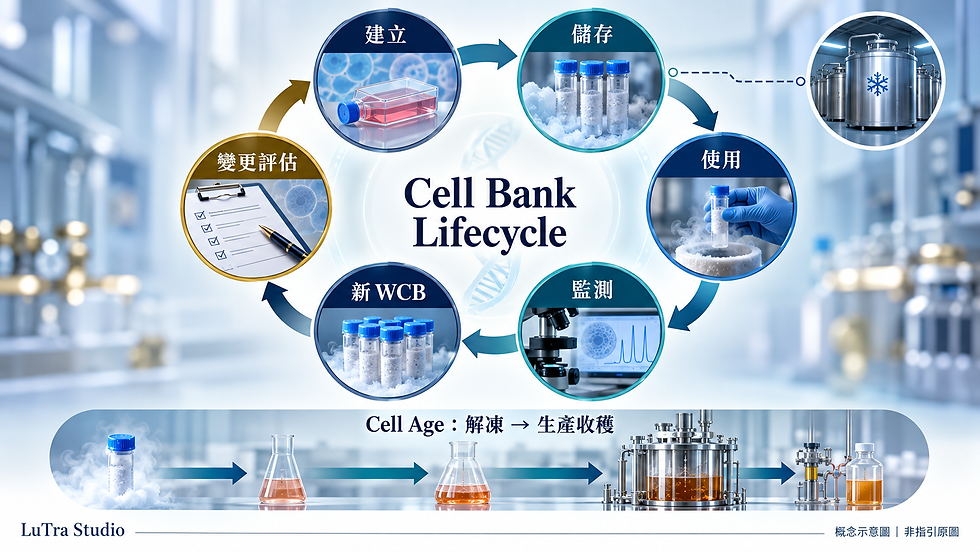
Cell bank control 是持續的 lifecycle program,涵蓋庫存、儲存、趨勢、技轉、新 bank 與變更後的 comparability。LuTra Studio
這篇延續系列(十)的 ICH Q5A(R2) viral safety:上一篇討論如何以來源控制、病毒檢測與製程清除建立多層病毒安全證據;本篇則往上游追溯,說明 cell substrate 本身如何被建立、characterize 並在整個 lifecycle 中維持受控。
結語:Cell bank 是製程的起點,也是長期一致性的基準
Biologics Cell Bank Characterization 最重要的問題,不是「總共做了幾項 tests」,而是整套證據是否能支持一個一致的結論:這個 cell substrate 的來源可追溯、身分明確、污染風險受到控制,並且在預定 cell age 與儲存期間內,能持續產生符合預期的產品。
一套成熟的 strategy 應能說明:
cell lineage 與原料暴露歷史如何建立風險地圖
MCB/WCB architecture 為何適合預定製程與供應需求
identity、purity、stability 與 suitability assays 各自回答什麼問題
LIVCA/EOPC 如何代表實際 production window
nucleic-acid 與 product-level data 如何共同支持 genetic stability
storage、redundancy 與 inventory control 如何保護長期供應
新 bank、技轉與變更如何被評估並記錄於 CTD lifecycle
當 cell bank 不再只是 frozen vials,而是被視為一個持續維護的品質系統,它才能真正成為 biologics manufacturing consistency 的可靠起點。
LuTra Studio 協助 biotechnology companies 與開發團隊建立 phase-appropriate 的 Biologics CMC strategy,包括 cell substrate risk assessment、MCB/WCB characterization plan、cell-age/genetic-stability study design、cell bank comparability、CTD Module 3 evidence mapping 與 lifecycle change assessment。
References
法規狀態核對日期:2026 年 10 月 19 日(America/New_York)。本文為一般性科學與法規資訊,不構成特定產品的法律、醫療或申報建議。


留言